
A Georgia DUI case can be built from much more than a breath or blood test. Prosecutors may use driving behavior, an officer’s observations, your statements, field sobriety exercises, body-camera or dash-camera footage, chemical test results, witness accounts, 911 recordings, crash evidence, and other records that help establish what happened before, during, and after a traffic stop.
Georgia law allows prosecutors to pursue a DUI charge based on allegations that alcohol, drugs, or a combination of substances made you less safe to drive. Georgia also recognizes an alcohol per se DUI charge when a person’s alcohol concentration is 0.08 grams or more within three hours after driving or being in actual physical control, when the alcohol was consumed before the driving ended.
The State still has to prove the charge. Evidence can be challenged when it was unlawfully obtained, when required procedures were not followed, when a test result is unreliable, or when video and other records do not support the officer’s account.
If you are facing a DUI accusation in Atlanta, Georgia, the key question is not simply whether the State has evidence. The question is what that evidence proves, whether it is admissible, and how it fits with the rest of the case.
For more information about DUI defense in Atlanta, visit:
https://www.willislawga.com/atlanta-dui-lawyers/

2025 Atlanta's Best - Defense Law Firm

BadAss Attorney

Best Lawyers In America

10 Consecutive Years Selected to Super Lawyers

AVVO Client's Choice

Best Lawyers Best Law Firms
How Georgia DUI Cases Are Proven 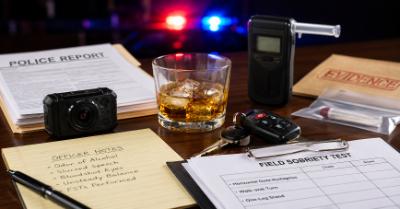
Under O.C.G.A. § 40-6-391, Georgia recognizes several DUI theories. A person can be charged with driving under the influence of alcohol, drugs, or certain combinations of substances to the extent that the person is less safe to drive. The statute also includes an alcohol per se provision based on an alcohol concentration of 0.08 grams or more within the statutory three-hour period.
A prosecutor does not always need one dramatic piece of evidence. The State may present several categories of evidence together and argue that the combined facts prove impairment, an unlawful alcohol concentration, or both.
A defense review should look at each item separately and then compare the items against one another. A police report may sound damaging on its own, but video, laboratory records, witness statements, medical information, or timing evidence may provide a different picture.
Driving Behavior Before the Stop
Evidence often begins before an officer speaks with you. Police may describe driving behavior that they believe supports the traffic stop or later DUI investigation, such as:
- Weaving within or outside a lane
- Speeding or driving unusually slowly
- Delayed movement at a traffic signal
- Striking a curb or nearly striking another vehicle
- Failing to maintain a lane
- Making an improper turn
- Stopping in an unusual location
- Being involved in a crash
Those observations can help explain why an officer initiated contact, but they do not automatically prove DUI. Driving behavior can have more than one explanation.
A defense lawyer may compare the officer’s report with dash-camera footage, traffic conditions, road design, lane markings, weather, signage, the length of the observation period, and other available evidence.
The legal basis for the stop also matters. If police did not have a lawful basis for the stop or detention, a lawyer can evaluate whether evidence should be challenged through a motion to suppress.
More information about unlawful police stops is available at:
https://www.willislawga.com/atlanta-unlawful-police-stop-attorneys/
He's the only lawyer in the State of Georgia to ever be recognized for all three of these accomplishments. Received the Samurai Lawyer Award for having gone to jail for a total of 4 days in order to save his own client Received the BadAss Lawyer Award for the biggest impact of all DUI lawyers in DUI defense in the country Received the vote of Georgia Lawyers as a Superlawyer in DUI Law for 10 straight consecutive yearsGreg Willis has been successful at defending DUI cases (over 93.1% without a conviction)
Officer Observations During the Encounter
After a stop, officers often document physical and behavioral observations. The report may mention:
- An odor of alcohol
- Bloodshot or watery eyes
- Slurred speech
- Confusion
- Fumbling with a driver’s license or other documents
- Unsteady movement
- Difficulty following instructions
These observations can become part of the prosecution’s evidence, but context matters. Fatigue, allergies, anxiety, an injury, a medical condition, prescription medication, environmental conditions, or the stress of a roadside encounter can affect how a person looks, sounds, or moves.
Body-camera footage can be especially useful because it may allow the court, lawyers, and jurors to compare the officer’s written description with what the recording shows.
Statements You Make to Police
Your own words may become evidence in a DUI case. An officer may ask where you were coming from, whether you consumed alcohol, how much you drank, when you last had a drink, whether you took medication, or whether you feel impaired.
A statement such as “I had two drinks” may be used with other evidence to build a timeline. Prosecutors may also focus on inconsistent answers or statements made later during transport, booking, or chemical testing.
Not every statement is automatically admissible. The legal analysis can depend on when the statement was made, whether you were in custody, whether the statement resulted from interrogation, whether required warnings applied, and whether constitutional protections were respected.
A DUI attorney can review the full sequence of the stop, investigation, arrest, and questioning rather than treating every statement in a police report as unquestionable evidence.
Greg has truly mastered his craft. His preparation is second to none and his confidence helps reduce the nervousness and anxiety his clients face. He is a real life version of Harvey Specter and I highly recommend him.” - Travis Greg and his team are absolutely incredible. Greg explained everything to me in detail, as this is the first ever time I have been arrested. Regular updates throughout the process which allowed me to get on with everyday life. 200% I would recommend Greg and his team to anyone with a DUI case." - James Hellens Mr Willis is the best in the business. He knows the law inside and out. I was in a serious jam and Greg got my dui reduced to a reckless driving. This man will fight for you every step of the way." - Anonymous
Field Sobriety Exercises
Georgia officers frequently use standardized field sobriety exercises during DUI investigations. The three commonly recognized standardized exercises are:
- Horizontal gaze nystagmus, often called HGN
- Walk-and-turn
- One-leg stand
The State may use an officer’s observations during these exercises to argue that you displayed clues associated with impairment. The defense can examine whether the officer gave the instructions correctly, demonstrated the exercise properly, used an appropriate surface, followed the training protocol, and scored the performance accurately.
Physical and environmental conditions can also matter. Back or knee problems, balance disorders, neurological conditions, vision issues, footwear, uneven pavement, poor lighting, fatigue, wind, and anxiety may affect performance.
More information about field sobriety evidence is available at:
https://www.willislawga.com/field-sobriety-tests-lawyers-in-atlanta-ga/
Related Videos
Choosing a Georgia DUI Attorney
Defenses and Strategies to Defend a DUI Charge
Breath, Blood, and Urine Test Results
Chemical testing can be central to a Georgia DUI case. O.C.G.A. § 40-6-392 addresses chemical analyses of blood, urine, breath, and other bodily substances. The statute includes requirements concerning approved testing methods, equipment, operators, blood draws, and a person’s right to obtain an additional chemical test from qualified personnel.
A reported number or laboratory finding should not be reviewed in isolation. Depending on the type of test, a defense lawyer may examine:
- Whether the testing method complied with applicable requirements
- Whether the breath-testing instrument was in proper working order
- Whether the operator held the required permit
- Whether required testing procedures were followed
- Whether a blood draw was performed by a person qualified under Georgia law
- How the sample was labeled, stored, transported, and analyzed
- Whether the chain of custody is supported by the available records
- Whether contamination, fermentation, or an interfering substance is supported by the facts
- How much time passed between driving and testing
Georgia law also provides a right to an additional chemical test after a person submits to the requested state-administered testing. The circumstances surrounding the request, testing process, and opportunity for an independent test can become part of the defense review.
For more information about Georgia DUI testing, visit:
https://www.willislawga.com/dui-testing-in-georgia/
Body-Camera, Dash-Camera, and Other Video Evidence
Video can be some of the most useful evidence in a DUI case because it can preserve what actually happened during key parts of the investigation.
Body-camera and patrol-car recordings may capture:
- Driving before the stop
- The officer’s first conversation with you
- Your speech, balance, and movements
- Field sobriety instructions and performance
- Statements made during the investigation
- The arrest and events immediately afterward
Other video may exist near a business, parking garage, apartment complex, residence, or intersection. That footage may help establish timing, driving behavior, your condition before police arrived, or what happened during a crash.
Video does not always favor one side. A recording may support part of the prosecution’s account while undermining another part. That is why the full recording should be compared with the police report rather than reduced to a short description.
Witnesses, 911 Calls, and Crash Evidence
Not every DUI investigation begins with an officer personally observing the driving. A witness may call 911, report a collision, identify a driver, or describe conduct before police arrive.
Prosecutors may seek to use:
- Witness statements
- 911 recordings
- Photographs and video
- Vehicle damage
- Scene measurements
- Passenger statements
- Lawfully obtained medical evidence
- Accident reconstruction evidence
- Electronic vehicle data, when available and lawfully obtained
A defense lawyer can examine whether a witness had a clear view, whether the account changed over time, whether the caller identified the correct vehicle or driver, and whether physical evidence supports the reported sequence of events.
Refusal Evidence Requires Careful Legal Review
A refusal to submit to a requested chemical test can raise separate driver’s license and courtroom issues.
Under Georgia’s current implied consent statute, the notice given to drivers states that refusing state-administered testing can lead to a driver’s license suspension. The statute also specifically states that refusal to submit to blood or urine testing may be offered into evidence at trial.
Breath-test refusal is different. The Supreme Court of Georgia has held that using a person’s refusal to submit to a breath test as evidence of guilt at a criminal trial violates the Georgia Constitution’s protection against compelled self-incrimination.
The exact test requested matters. A lawyer should review:
- Which test the officer requested
- Which implied consent notice was read
- Whether the notice was given at the proper point in the investigation
- Whether the person submitted or refused
- Whether police later obtained a warrant
- Whether an administrative license suspension was initiated
- Whether the prosecution is trying to use refusal evidence in court
Broad advice about “refusing a DUI test” can miss these distinctions. The legal analysis should be based on the exact test and facts involved.
Evidence Can Be Challenged Even When It Exists
A DUI defense does not depend on proving that evidence is missing. Existing evidence can still be challenged.
A defense lawyer may question:
- Whether the stop or detention was lawful
- Whether statements were obtained in a legally permissible manner
- Whether field sobriety exercises were administered and scored properly
- Whether the officer’s report matches the video
- Whether chemical testing met Georgia’s statutory requirements
- Whether laboratory records support the reported result
- Whether the evidence establishes the person who was driving
- Whether the timing supports the prosecution’s theory
- Whether medical or environmental factors provide another explanation for the observations
For example, a person may have difficulty with a balance exercise but appear steady while walking before and after the exercise. A chemical test may produce a numerical result, but the defense can still examine the testing foundation, collection process, timing, handling, and what that result proves under the specific charge.
A DUI case should be evaluated by comparing the evidence, not by assuming that the police report tells the entire story.
What to Do After a Georgia DUI Arrest
Preserve the records you already have. Keep your citation, bond paperwork, driver’s license notices, towing information, testing paperwork, and medical records that may help explain physical symptoms or limitations.
You may also want to:
- Write down what you remember while the events are still fresh
- Save receipts, messages, photographs, and location information that may help establish a timeline
- Keep the clothing and footwear you wore if they may be relevant to field sobriety performance
- Identify passengers or other witnesses who may have information
- Avoid posting facts about the case on social media
- Give your attorney every notice or document related to your driver’s license
A lawyer can request discovery, review recordings, examine testing records, evaluate driver’s license issues, and determine whether video or other evidence should be preserved before it is overwritten or lost.
You can learn more about attorney Greg Willis at:
https://www.willislawga.com/georgia-attorney-greg-willis/
Speak With an Atlanta DUI Attorney About the Evidence
If you have been charged with DUI in Atlanta, Georgia, or a nearby area, Willis Law Firm can review the traffic stop, officer observations, statements, field sobriety evidence, video, chemical testing, and other facts that may affect your case.
Greg Willis has extensive training and experience involving DUI evidence, including field sobriety evaluations and chemical testing. A detailed review can help identify which evidence may be challenged and which issues require immediate attention.
Call 404-800-0025 to request a consultation.
You can also contact the firm at:
https://www.willislawga.com/contact-us/
This article is for general informational purposes only and is not legal advice. Reading this article does not create an attorney-client relationship. Consult an attorney about your specific situation. This website constitutes attorney advertising.