
If you are pulled over in Georgia on suspicion of driving under the influence and the officer asks you to take a breathalyzer test, your decision matters immediately. Georgia law operates under implied consent. By driving on the state’s roads, you have already agreed to submit to chemical testing when lawfully requested. Refusing the test does not make the DUI investigation disappear. In fact, the consequences can be immediate and severe, starting with a one-year license suspension. Understanding what refusal really means is critical so you can make informed decisions and protect your future.
Understanding Georgia’s Implied Consent Law 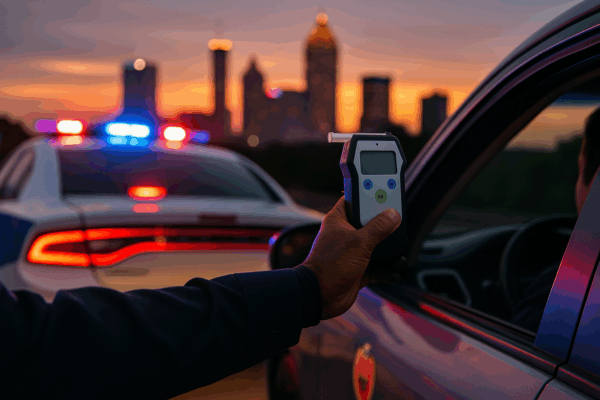
Georgia’s implied consent law states that every driver automatically agrees to chemical testing of breath, blood, or urine after a lawful arrest for suspected DUI. If an officer has probable cause and reads you the required warning, refusal triggers consequences regardless of whether you are ultimately convicted of DUI. The law is designed to encourage compliance with testing and to give prosecutors additional evidence when pursuing DUI cases.
Many drivers mistakenly believe refusing the test will prevent a DUI charge. The reality is that refusal can make things worse. Prosecutors may still pursue DUI charges using officer testimony, dash or body camera footage, field sobriety test results, and witness statements. The refusal itself can even be introduced in court as evidence of guilt.
Immediate License Suspension After Refusal
The most serious and immediate penalty for refusing a breathalyzer in Georgia is the automatic one-year suspension of your driver’s license. Unlike other suspensions, this one is considered a hard suspension. That means you cannot apply for a limited driving permit to commute to work, school, or medical appointments.
For many people in Atlanta and surrounding areas such as Sandy Springs, Dunwoody, and Loganville, the inability to drive can feel devastating. Public transit is not always a practical solution, and relying on friends, family, or rideshare services quickly becomes expensive and stressful. The loss of independence is often one of the most punishing aspects of refusal.
How Refusal Impacts a DUI Case
Refusing a breathalyzer does not shield you from prosecution. In fact, refusal can work against you in two ways. First, prosecutors are allowed to argue that your refusal shows a consciousness of guilt, implying that you refused because you knew the test would show impairment. Judges and juries are permitted to consider this when weighing the evidence.
Second, refusal does not prevent the use of other evidence. Officers can testify about slurred speech, unsteady balance, or the smell of alcohol. Field sobriety tests, even though imperfect, can be presented to the court. Video footage often becomes persuasive evidence. In short, prosecutors do not need a breathalyzer result to build a case.
He's the only lawyer in the State of Georgia to ever be recognized for all three of these accomplishments. Received the Samurai Lawyer Award for having gone to jail for a total of 4 days in order to save his own client Received the BadAss Lawyer Award for the biggest impact of all DUI lawyers in DUI defense in the country Received the vote of Georgia Lawyers as a Superlawyer in DUI Law for 10 straight consecutive yearsGreg Willis has been successful at defending DUI cases (over 93.1% without a conviction)
Appealing a Suspension with Georgia DDS
You do have rights after refusing a breathalyzer, but strict deadlines apply. Within thirty days of the refusal, you must either file an appeal with the Georgia Department of Driver Services or apply for an ignition interlock device limited permit.
Filing an appeal challenges the suspension. A hearing will be scheduled with the Office of State Administrative Hearings. At this hearing, the officer must testify about the stop, the arrest, and whether the implied consent warning was read properly. These hearings can sometimes result in reinstatement of driving privileges, but success depends heavily on the facts and the quality of your defense.
Ignition Interlock Device Limited Permit Option
The alternative to filing an appeal is requesting an ignition interlock device limited permit. This option allows you to continue driving but requires installation of a breath-testing device in your vehicle for at least one year. Each time you start your car, you must blow into the device to prove sobriety. Costs for installation, calibration, and monitoring are your responsibility.
Greg has truly mastered his craft. His preparation is second to none and his confidence helps reduce the nervousness and anxiety his clients face. He is a real life version of Harvey Specter and I highly recommend him.” - Travis Greg and his team are absolutely incredible. Greg explained everything to me in detail, as this is the first ever time I have been arrested. Regular updates throughout the process which allowed me to get on with everyday life. 200% I would recommend Greg and his team to anyone with a DUI case." - James Hellens Mr Willis is the best in the business. He knows the law inside and out. I was in a serious jam and Greg got my dui reduced to a reckless driving. This man will fight for you every step of the way." - Anonymous
While the ignition interlock can be inconvenient and expensive, many people choose it because it allows them to keep driving to work, school, and essential appointments. Choosing this option is complex and requires strict compliance with rules and deadlines. Consulting with a DUI attorney before deciding is strongly recommended.
Long-Term Consequences of Refusal
The impact of refusing a breathalyzer does not end after a suspension. Insurance companies usually treat a refusal the same as a DUI conviction. Rates can skyrocket for years, making car ownership financially difficult. Some insurers may even refuse coverage altogether.
Employment can also be affected. Many jobs require reliable transportation. If you hold a commercial driver’s license, refusal can be career-ending. Georgia CDL holders face lifetime consequences, as refusal is considered a major violation under federal regulations.
A refusal may also affect your ability to travel freely. Out-of-state licenses can be suspended in Georgia, and your home state will usually honor that suspension. This means the consequences follow you even if you do not live in Georgia full time.
Defenses Against Refusal Penalties
Even though Georgia law is strict, defenses exist. An experienced DUI attorney will carefully examine the details of your arrest. Some common defenses include whether the officer had reasonable suspicion to make the stop, whether probable cause existed for the arrest, and whether the implied consent warning was read properly and at the correct time.
If the officer failed to follow required procedures, the refusal may not be legally admissible. Additionally, evidence from the traffic stop itself may be challenged, which could weaken the entire case. Every case is unique, and only a thorough review by a skilled attorney can reveal potential defenses.
Related Videos
Choosing a Georgia DUI Attorney
Defenses and Strategies to Defend a DUI Charge
Why Acting Quickly Matters
Timing is critical after refusing a breathalyzer in Georgia. You have just thirty days to protect your license through an appeal or ignition interlock permit request. Waiting too long can permanently close off your options.
Taking action quickly also allows your lawyer to gather evidence while it is still fresh. Surveillance video, witness statements, and police reports can make a difference, but they are often harder to obtain as time passes. Swift legal guidance can preserve valuable opportunities.
The Role of an Experienced DUI Attorney
Facing a DUI charge is stressful enough. Adding the penalties of refusal only increases the stakes. An experienced attorney can explain your options clearly, represent you at administrative hearings, and build a strong defense for court.
At Willis Law Firm, our team has represented clients throughout Atlanta and across Georgia who are dealing with the severe penalties of breathalyzer refusal. We understand the law, the courts, and the strategies that can make a difference. Our goal is to protect your license, your record, and your future opportunities.
Protecting a Professional License After a DUI and Refusal of a Blood Test Result: DUI Dismissed with No Jail Time and No Loss of License Challenging Admissibility of a .19 BAC Blood Test and Field Sobriety Evaluation Result: No Jail Time, No DUI on Record, No License SuspensionFeatured Case Results
Take the Next Step with Willis Law Firm
If you or a loved one refused a breathalyzer in Georgia, do not try to face the process alone. The consequences are too serious and the deadlines are too strict. Call Willis Law Firm today for a consultation. We proudly represent clients in Atlanta, Sandy Springs, Dunwoody, and nearby areas.