
In Georgia, the consequences of refusing a breathalyzer test can be severe, even though you may have the right to refuse. If you are stopped by law enforcement officers on suspicion of driving under the influence (DUI), one of the most common questions is whether you can refuse the breathalyzer test. While it is within your rights to refuse, refusing such a test can lead to significant consequences that you should carefully consider. In Georgia, refusing a breathalyzer test can result in penalties such as the automatic suspension of your driver’s license and potential further complications in a DUI case. This page will explain Georgia’s implied consent law, the consequences of refusing a breathalyzer test, and what you should do if faced with a DUI stop.

2025 Atlanta's Best - Defense Law Firm

BadAss Attorney

Best Lawyers In America

10 Consecutive Years Selected to Super Lawyers

AVVO Client's Choice

Best Lawyers Best Law Firms
Understanding Georgia’s Implied Consent Law 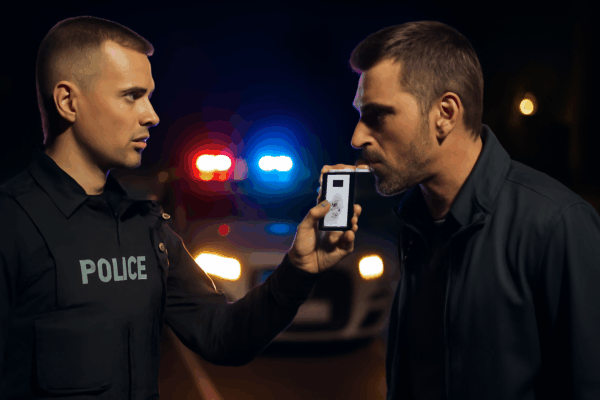
Georgia has an implied consent law that automatically applies when you obtain a driver’s license in the state. This law dictates that, by driving in Georgia, you have already agreed to submit to a chemical test if requested by a law enforcement officer during a DUI stop. The chemical test can include a breathalyzer test, a blood test, or a urine test, depending on the situation. If a law enforcement officer has probable cause to suspect you are under the influence of alcohol or drugs, they may request a breathalyzer test, and if you refuse, it can lead to serious penalties.
The concept behind Georgia’s implied consent law is simple: by driving on the state’s roads, you implicitly agree to submit to such tests to ensure safe driving. While you have the right to refuse the test, there are penalties for doing so, and these penalties can be just as severe as those for a DUI conviction itself.
What Happens If You Refuse a Breathalyzer Test in Georgia?
Refusing a breathalyzer test in Georgia comes with automatic consequences, even though the refusal does not result in criminal charges on its own. According to the state’s laws, if you refuse to take a breathalyzer test after being arrested for DUI, your driver’s license will be automatically suspended for a period of time. The duration of the suspension will depend on whether it is your first offense or if you have previous refusals.
He's the only lawyer in the State of Georgia to ever be recognized for all three of these accomplishments. Received the Samurai Lawyer Award for having gone to jail for a total of 4 days in order to save his own client Received the BadAss Lawyer Award for the biggest impact of all DUI lawyers in DUI defense in the country Received the vote of Georgia Lawyers as a Superlawyer in DUI Law for 10 straight consecutive yearsGreg Willis has been successful at defending DUI cases (over 93.1% without a conviction)
For a first offense, the suspension is typically one year. If you refuse the breathalyzer test a second or subsequent time, the suspension increases, and you may face additional penalties such as the requirement to install an ignition interlock device in your vehicle. Even if you refuse a breathalyzer test, you may still be arrested for DUI and face a DUI charge based on other evidence, such as field sobriety tests, observations made by the officer, and potentially a blood test if you consent to it.
The Difference Between the Roadside Test and the State-Administered Test
One of the most important — and most misunderstood — aspects of Georgia’s breathalyzer laws is that there are actually two different tests involved in a DUI stop, and they carry different consequences for refusal.
The Alco-Sensor (Roadside Preliminary Test)
The first test is the portable breathalyzer, called the Alco-Sensor, that officers use at the roadside before making an arrest. This is a preliminary screening device, and in Georgia, you are not required to submit to this test. Refusing the Alco-Sensor does not trigger implied consent penalties and cannot be used against you in the same way as refusing the official state test. Many experienced DUI attorneys advise clients to decline the Alco-Sensor, though this is a decision that should be made carefully based on your specific situation.
The State-Administered Test (Intoxilyzer or Blood/Urine)
The second test is the official state-administered chemical test, typically conducted at the police station using the Intoxilyzer 9000, or via a blood or urine draw. This is the test covered by Georgia’s implied consent law. Refusing this test is what triggers the automatic license suspension and other implied consent penalties. Before administering this test, officers are required to read you Georgia’s implied consent notice — if they fail to do so properly, the admissibility of the test results or the consequences of your refusal may be challengeable.
Understanding which test you are being asked to take — and when — is important. If you are unsure, calmly ask the officer to clarify before responding.
Penalties for Refusing a Breathalyzer Test
If you refuse a breathalyzer test during a DUI stop, the penalties are automatic and set by Georgia’s Department of Driver Services. These penalties can be more severe than the penalties for a DUI conviction in some cases. Here is a breakdown by offense:
First Refusal
Your driver’s license will be suspended for one year with no limited driving permit available. This is a hard suspension — unlike a BAC-over-the-limit suspension, there is no work permit or restricted license option for a first refusal. You may be able to contest the suspension by requesting an administrative hearing within the required deadline.
Second Refusal
A second refusal results in a three-year license suspension. You will also be required to install an ignition interlock device in your vehicle for a period after reinstatement. An ignition interlock device prevents the vehicle from starting unless you provide a clean breath sample.
Third or Subsequent Refusal
Penalties escalate further with each subsequent refusal. Extended suspension periods apply, and the circumstances of your overall DUI history may increase the likelihood of felony-level charges depending on the facts of your case.
It is important to note that these administrative penalties run separately from your criminal DUI case. You can face both the administrative suspension from the refusal and criminal DUI penalties if convicted — they are not mutually exclusive.
Greg has truly mastered his craft. His preparation is second to none and his confidence helps reduce the nervousness and anxiety his clients face. He is a real life version of Harvey Specter and I highly recommend him.” - Travis Greg and his team are absolutely incredible. Greg explained everything to me in detail, as this is the first ever time I have been arrested. Regular updates throughout the process which allowed me to get on with everyday life. 200% I would recommend Greg and his team to anyone with a DUI case." - James Hellens Mr Willis is the best in the business. He knows the law inside and out. I was in a serious jam and Greg got my dui reduced to a reckless driving. This man will fight for you every step of the way." - Anonymous
Can Refusing a Breathalyzer Test Help You Avoid a DUI Charge?
Many individuals believe that refusing a breathalyzer test might help them avoid a DUI charge, but this is not the case in Georgia. While refusing a breathalyzer test may prevent law enforcement from obtaining your blood alcohol content (BAC) level, it does not prevent the officer from arresting you and charging you with DUI. Officers can still charge you based on other forms of evidence, such as their observations of your behavior, your performance on field sobriety tests, and even video footage of the DUI stop.
Even if you refuse a breathalyzer test, you may still be convicted of DUI based on this other evidence. Prosecutors can use the officer’s testimony and other factors to argue that you were intoxicated, and your refusal to take the test can be used against you in court. While refusing the test may delay or complicate the prosecution’s case, it does not guarantee a favorable outcome.
Should You Refuse a Breathalyzer Test During a DUI Stop?
The decision to refuse a breathalyzer test is a personal one and depends on the specific circumstances of your case. It’s important to weigh the consequences carefully before making your decision. If you refuse a breathalyzer test, you will face the automatic suspension of your driver’s license and other legal penalties. However, if you submit to the test and your BAC is over the legal limit, you will likely face DUI charges and penalties, which can include fines, license suspension, mandatory DUI education programs, and possibly jail time.
If you are unsure of how to proceed when stopped by a law enforcement officer, it’s always a good idea to remain calm and respectful. You do not have to take a breathalyzer test immediately if you are unsure of your rights or the consequences. Instead, you can calmly ask for legal counsel or speak to an attorney who specializes in DUI cases.
Related Videos
Choosing a Georgia DUI Attorney
Defenses and Strategies to Defend a DUI Charge
What Should You Do If You Are Stopped for DUI?
If you are pulled over and suspected of DUI, here are some general guidelines to follow:
- Be respectful and calm: Cooperate with the officer without being confrontational. A calm and respectful demeanor can help the situation.
- Know your rights: You have the right to refuse a breathalyzer test, but this comes with consequences. Refusing may result in the suspension of your license and other penalties.
- Consider the consequences: Remember, refusing a breathalyzer test may not guarantee a better outcome in your case. Weigh the penalties and think about whether submitting to the test may help you avoid a prolonged legal battle.
- Consult with an attorney: If arrested, seek legal advice as soon as possible. A DUI defense attorney can provide guidance on the best course of action and help you navigate the legal process.
Refusing a breathalyzer test in Georgia may seem like an easy way to avoid the consequences of a DUI, but it can lead to severe penalties. In Georgia, the Implied Consent Law requires drivers to submit to chemical tests if requested, and refusing these tests can result in automatic license suspension and other penalties. Even without the breathalyzer results, law enforcement can still arrest you based on other evidence and charge you with DUI.
Contesting Your License Suspension After a Refusal
Many people who refuse a breathalyzer test in Georgia assume their license suspension is automatic and unavoidable. While the suspension does initiate automatically, you have the right to contest it — but you must act within a strict deadline.
After a DUI arrest involving a refusal, the arresting officer issues a DDS-1205 form, which serves as a temporary driving permit and a notice of the impending suspension. You have a limited window from the date of your arrest to request an administrative license suspension (ALS) hearing with the Georgia Department of Driver Services. If you request the hearing in time, your suspension is put on hold while the hearing is scheduled and conducted.
At the ALS hearing, an administrative law judge reviews whether the officer had lawful grounds to request the test, whether the implied consent notice was properly read, and whether the refusal was properly documented. If any of these procedural requirements were not met, the suspension may be rescinded.
This hearing also serves another important purpose — it gives your attorney the opportunity to question the arresting officer under oath before the criminal case reaches court, which can be invaluable for building your defense.
Missing the deadline to request this hearing means losing the right to contest the suspension entirely. If you have refused a breathalyzer test in Georgia, contacting an attorney immediately after your arrest is essential.
Protecting a Professional License After a DUI and Refusal of a Blood Test Result: DUI Dismissed with No Jail Time and No Loss of License Challenging Admissibility of a .19 BAC Blood Test and Field Sobriety Evaluation Result: No Jail Time, No DUI on Record, No License SuspensionFeatured Case Results
Frequently Asked Questions — Refusing a Breathalyzer Test in Georgia
Yes, you can refuse a breathalyzer test in Georgia, but there are automatic consequences for doing so. Under Georgia’s implied consent law, refusing the state-administered chemical test results in an automatic license suspension — one year for a first refusal with no limited permit available. The refusal can also be introduced as evidence against you in your criminal DUI case. Refusing the roadside Alco-Sensor preliminary test, however, does not carry the same implied consent penalties.
The roadside Alco-Sensor is a preliminary screening device used before an arrest. You are not legally required to take this test and refusing it does not trigger implied consent penalties. The official state-administered test — typically conducted at the police station using the Intoxilyzer 9000, or via blood or urine draw — is the test covered by implied consent. Refusing the state test is what triggers the automatic suspension and other penalties.
For a first refusal, your license is automatically suspended for one year with no limited driving permit available. For a second refusal, the suspension increases to three years and an ignition interlock device is required upon reinstatement. These are administrative penalties that run separately from any criminal DUI charges you may face.
Yes. In Georgia, your refusal to submit to a chemical test can be introduced as evidence in your criminal DUI case. Prosecutors may argue that your refusal suggests consciousness of guilt — meaning you refused because you knew you were over the legal limit. An experienced DUI attorney can work to counter this argument and challenge other aspects of the prosecution’s case.
Yes. Refusing the breathalyzer test does not prevent a DUI conviction. Officers can still arrest you based on their observations, your performance on field sobriety tests, dashcam or bodycam footage, and other evidence. Prosecutors have successfully obtained DUI convictions without chemical test results. That said, without a BAC reading, the case relies more heavily on subjective evidence — which an experienced attorney can challenge.
Yes. After a DUI arrest involving a refusal, you have a limited window to request an administrative license suspension hearing with the Georgia Department of Driver Services. If you request the hearing in time, your suspension is put on hold while it is scheduled. At the hearing, an administrative law judge reviews whether the stop, arrest, and implied consent procedures were properly followed. If procedural requirements were not met, the suspension may be rescinded. Missing this deadline means losing the right to contest the suspension entirely.
No. Refusing the test does not guarantee a better outcome and comes with its own significant consequences, including the automatic license suspension. Whether refusing or submitting is the better strategic decision depends heavily on the specific facts of your case — your estimated BAC, your driving history, your employment situation, and your professional licensing obligations. This is a decision best evaluated with an experienced DUI attorney.
Contact a DUI attorney immediately. The administrative license suspension deadline is time-sensitive, and acting quickly preserves your right to contest the suspension at a hearing. An attorney can also begin reviewing the circumstances of your arrest, the implied consent notice procedure, and any other aspects of your case that may support a defense against the DUI charge itself.
Refusing a breathalyzer test in Georgia is not a simple decision, and its consequences extend well beyond the moment of the traffic stop. Understanding the difference between the roadside and state-administered tests, knowing your right to contest the administrative suspension, and having an attorney involved early are all critical to protecting your license and your record.
At Willis Law Firm, we have represented clients across Atlanta and Georgia who have refused breathalyzer tests, submitted to tests, and every situation in between. We know how to challenge the stop, the implied consent notice, the suspension, and the underlying DUI charge — and we bring that experience to every case we take on.
If you have been arrested for DUI or refused a breathalyzer test in Georgia, do not wait. Contact Willis Law Firm today for a free consultation and let us evaluate your options before any deadlines pass.