Willis Law Firm represents individuals throughout Atlanta, Georgia in DUI defense matters involving roadside sobriety testing during holiday weekend enforcement periods. These stops often involve increased patrol presence, sobriety checkpoints, and standardized field evaluations used by officers to assess possible impairment. While these tests are widely used, they rely heavily on officer interpretation and can be influenced by environmental conditions, physical limitations, and procedural inconsistencies. Understanding how these evaluations are conducted, what officers are trained to observe, and how decisions are made during holiday enforcement can provide important clarity for drivers who find themselves stopped or investigated.

2025 Atlanta's Best - Defense Law Firm
BadAss Attorney

Best Lawyers In America

10 Consecutive Years Selected to Super Lawyers

AVVO Client's Choice

Best Lawyers Best Law Firms
Why Holiday Weekends Lead to Increased DUI Enforcement in Georgia 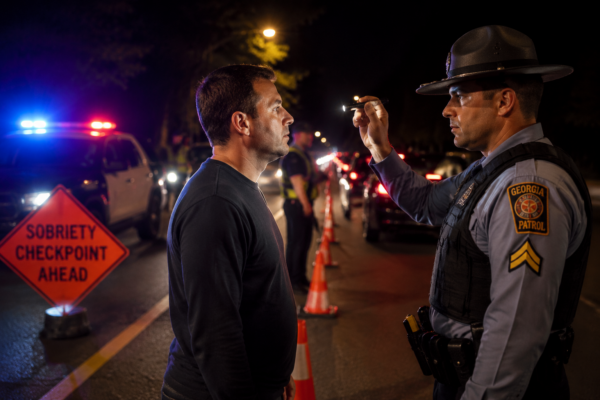
Holiday weekends in Georgia consistently trigger heightened law enforcement activity due to increased traffic volume, travel activity, and social gatherings where alcohol may be consumed. Agencies across the state assign additional patrol units to highways, interstates, and local roadways to monitor for unsafe driving behavior and reduce the likelihood of collisions. These enforcement efforts are not limited to urban centers such as Atlanta but extend across suburban and rural road networks where traffic patterns also increase significantly.
Officers are trained to identify driving behaviors that may indicate impairment, including inconsistent lane control, delayed acceleration or braking, failure to maintain speed, and improper signaling. Once a stop is initiated, the nature of the encounter often shifts from a routine traffic stop into an investigative process focused on determining whether impairment may be present. At this stage, roadside sobriety evaluations frequently become a central part of the officer’s assessment.
Understanding Roadside Sobriety Evaluations in Georgia
Roadside sobriety evaluations, commonly referred to as standardized field sobriety tests, are structured assessments used by officers when impairment is suspected. These evaluations are designed to measure balance, coordination, attention, and the ability to follow multi-step instructions. They are not medical examinations and do not directly measure alcohol concentration in the body, but instead serve as observational tools to assist officers in forming an overall impression.
The three primary standardized evaluations used in Georgia include the horizontal gaze nystagmus test, the walk-and-turn test, and the one-leg stand test. Each of these tests is designed to identify specific indicators of potential impairment based on standardized scoring criteria used in law enforcement training.
A detailed breakdown of these procedures is available here:
https://www.willislawga.com/2023/07/07/the-different-types-of-field-sobriety-tests-used-in-atlanta-georgia/
He's the only lawyer in the State of Georgia to ever be recognized for all three of these accomplishments. Received the Samurai Lawyer Award for having gone to jail for a total of 4 days in order to save his own client Received the BadAss Lawyer Award for the biggest impact of all DUI lawyers in DUI defense in the country Received the vote of Georgia Lawyers as a Superlawyer in DUI Law for 10 straight consecutive yearsGreg Willis has been successful at defending DUI cases (over 93.1% without a conviction)
During these evaluations, officers provide instructions that the driver must follow precisely. The officer then observes performance for specific indicators such as balance issues, inability to follow directions, or irregular physical coordination. While these tests are standardized in theory, real-world conditions rarely mirror controlled testing environments.
What Officers Observe During Sobriety Testing
Officers conducting roadside sobriety evaluations are trained to look for a set of defined indicators commonly associated with impairment. These may include difficulty maintaining balance, failure to complete instructions accurately, stepping off a designated line, or using arms for balance during physical tests. During the horizontal gaze nystagmus test, officers also observe involuntary eye movements that may be interpreted as signs of impairment.
Despite standardized training, interpretation remains highly subjective. Officers must assess multiple factors simultaneously, including the driver’s behavior prior to the stop, physical appearance, responsiveness to instructions, and performance on each test. This combination of observations forms the basis of their overall conclusion regarding possible impairment.
External factors often play a significant role in performance. Uneven road surfaces, poor lighting conditions, weather, fatigue, nervousness, and certain medical conditions can all influence a driver’s ability to perform these tasks successfully. These variables are especially relevant during nighttime holiday enforcement operations, when roadside conditions may be less predictable.
Greg has truly mastered his craft. His preparation is second to none and his confidence helps reduce the nervousness and anxiety his clients face. He is a real life version of Harvey Specter and I highly recommend him.” - Travis Greg and his team are absolutely incredible. Greg explained everything to me in detail, as this is the first ever time I have been arrested. Regular updates throughout the process which allowed me to get on with everyday life. 200% I would recommend Greg and his team to anyone with a DUI case." - James Hellens Mr Willis is the best in the business. He knows the law inside and out. I was in a serious jam and Greg got my dui reduced to a reckless driving. This man will fight for you every step of the way." - Anonymous
Sobriety Checkpoints and Holiday Enforcement Strategies
During holiday weekends, law enforcement agencies in Georgia may establish sobriety checkpoints in targeted areas. These checkpoints involve systematic stops of vehicles to assess driver safety and identify signs of impairment. If officers observe potential indicators of alcohol or drug use, drivers may be directed to a secondary screening area for further evaluation.
Checkpoint procedures must follow specific legal guidelines, including predetermined stopping patterns and supervisory oversight. However, the experience for drivers can vary based on traffic volume, location, and enforcement strategy. In many cases, roadside sobriety evaluations are conducted only after a secondary screening decision has been made.
Drivers often have questions regarding their rights during these encounters, particularly regarding what officers can request and how interactions are conducted. Additional guidance on this topic is available here:
https://www.willislawga.com/2023/01/26/know-your-rights-when-arrested/
Probable Cause and DUI Arrest Decisions in Georgia
Roadside sobriety evaluations are one component of a broader investigative process used to determine whether probable cause exists for an arrest. Officers must consider the totality of circumstances, including driving behavior prior to the stop, physical observations such as odor of alcohol or visible impairment indicators, and performance during standardized tests.
In some cases, preliminary breath testing may also be used to support an officer’s assessment. However, no single factor alone determines the outcome of the investigation. Instead, officers rely on a combination of observations and test results to reach a conclusion regarding probable cause.
More information regarding Georgia DUI thresholds and related legal standards can be found here:
https://www.willislawga.com/2023/04/04/understanding-the-legal-limit-for-dui-in-georgia/
Environmental and Human Factors Affecting Test Performance
Holiday enforcement conditions often introduce multiple environmental and human factors that can influence both officer observations and driver performance. Increased traffic congestion may lead to longer stops and heightened stress levels. Nighttime enforcement can involve limited visibility, uneven pavement, and roadside distractions caused by passing vehicles and emergency lighting.
Drivers may also experience fatigue from travel, dehydration, emotional stress from holiday events, or physical discomfort from extended time behind the wheel. These factors can significantly impact balance, coordination, and cognitive response during roadside evaluations. While officers are trained to account for some of these conditions, interpretation remains inherently subjective.
Related Videos
Choosing a Georgia DUI Attorney
Defenses and Strategies to Defend a DUI Charge
What Happens After a DUI Arrest
If an officer determines that probable cause exists, the driver may be placed under arrest and transported for chemical testing, such as breath or blood analysis. This process is used to further evaluate potential impairment and is often a key component of the prosecution’s case.
Following an arrest, individuals may face administrative consequences such as license suspension, court appearances, and other legal obligations depending on case specifics and prior history. The legal and personal impact of a DUI arrest can extend beyond the immediate incident, affecting driving privileges and long-term records.
Additional context regarding arrest procedures is available here:
https://www.willislawga.com/2023/04/06/the-role-of-a-police-officer-in-a-georgia-dui-arrest/
How Sobriety Tests Are Challenged in DUI Defense
Roadside sobriety evaluations are frequently examined in DUI defense cases due to their subjective nature. Defense strategies often focus on whether instructions were properly given, whether the officer followed standardized procedures, and whether environmental or medical factors affected performance.
Video evidence from body-worn cameras or dash cameras may also be reviewed to assess whether the officer’s interpretation aligns with what occurred during the stop. In some cases, inconsistencies in administration or documentation can become important factors in evaluating the reliability of the evidence.
Drivers may also face consequences related to driving privileges and insurance outcomes following an arrest. More information is available here:
https://www.willislawga.com/2023/04/10/the-impact-of-a-dui-on-your-georgia-drivers-license/
Legal Awareness During Holiday DUI Enforcement
Understanding how roadside sobriety evaluations are used during holiday enforcement periods can help drivers better understand the process and the factors involved in DUI investigations. While these tests are widely used, they are not definitive measures of impairment and must be considered alongside all other evidence gathered during a stop.
Legal guidance can assist in evaluating whether proper procedures were followed and whether the evidence supporting an arrest is reliable under Georgia law.
Speak With a Trusted Atlanta DUI Attorney Today
If you or someone you know has been subject to roadside sobriety testing during holiday enforcement in Georgia, Willis Law Firm provides DUI defense representation throughout Atlanta. Each case requires careful review of the circumstances surrounding the stop, the administration of tests, and the evidence used to support an arrest determination.
This content is provided for informational purposes only and does not constitute legal advice. Consult an attorney regarding your specific situation.