
When it comes to DUI cases in Georgia, the evidence presented by law enforcement plays a pivotal role in the determination of a driver’s guilt or innocence. Among the most important forms of evidence are blood draws and breath tests, both of which are used to measure a person’s blood alcohol concentration (BAC). While both serve the same purpose, these two types of tests differ significantly in how they are administered, their reliability, and how they can be challenged in court. Understanding the nuances of each test is crucial for anyone involved in a DUI case in Georgia.

2025 Atlanta's Best - Defense Law Firm

BadAss Attorney

Best Lawyers In America

10 Consecutive Years Selected to Super Lawyers

AVVO Client's Choice

Best Lawyers Best Law Firms
Understanding Blood Draws and Breath Tests 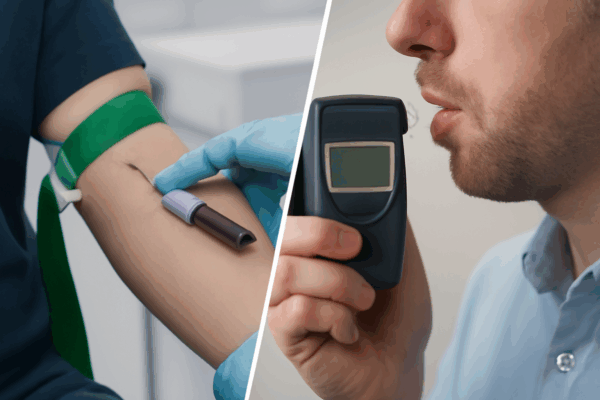
Blood draws involve taking a sample of a person’s blood to test for alcohol or drugs in their system. This test is typically administered at a medical facility or hospital under the supervision of medical professionals. Blood tests are regarded as the most accurate way to measure BAC because they directly measure the alcohol content in the bloodstream. They also have the advantage of being able to detect drugs and other substances that may not be detected in a breath test. However, blood draws require a warrant unless the driver consents to the procedure, and there are strict guidelines regarding the handling, storage, and testing of the blood sample.
On the other hand, breath tests are more commonly used by law enforcement during DUI stops. These tests are quick and easy to administer, with the individual simply blowing into a breathalyzer device. The device then calculates BAC based on the amount of alcohol in the driver’s breath. Breath tests are less invasive than blood draws, but they come with some drawbacks. Breathalyzers can be affected by various factors, including calibration issues, the presence of substances in the mouth, and the amount of time that has passed since the individual last drank. While breath tests are convenient and non-invasive, they are generally considered to be less reliable than blood tests.
Legal Implications of Blood Draws in Georgia
In Georgia, law enforcement can request a blood draw when a driver is suspected of being under the influence of alcohol or drugs. Blood tests are often required in cases where there has been a serious accident or if there is a suspicion that the driver is under the influence of drugs in addition to alcohol. Blood draws are also more reliable when it comes to detecting the presence of drugs or other controlled substances, which breath tests cannot always detect.
However, there are important legal considerations regarding blood draws. Georgia’s implied consent law requires that drivers consent to chemical testing if they are arrested for DUI. Refusing to submit to a blood draw can lead to automatic penalties, including the suspension of a driver’s license. Despite this, a blood draw can only be conducted without consent under certain conditions, such as when there is a reasonable belief that the driver has caused injury or death. Otherwise, law enforcement must obtain a warrant before proceeding with a blood draw. If the proper legal procedures are not followed, the blood test results can be challenged in court.
Blood draws are considered highly reliable, but there is still the potential for mistakes in handling the evidence. The blood must be properly stored and transported, and the sample must be tested according to strict protocols. Any deviations from these procedures can lead to challenges regarding the validity of the test results. An experienced DUI defense attorney will closely examine the circumstances surrounding the blood draw to ensure that the evidence is admissible in court.
He's the only lawyer in the State of Georgia to ever be recognized for all three of these accomplishments. Received the Samurai Lawyer Award for having gone to jail for a total of 4 days in order to save his own client Received the BadAss Lawyer Award for the biggest impact of all DUI lawyers in DUI defense in the country Received the vote of Georgia Lawyers as a Superlawyer in DUI Law for 10 straight consecutive yearsGreg Willis has been successful at defending DUI cases (over 93.1% without a conviction)
Breath Tests and Their Role in DUI Cases
Breath tests are one of the most common forms of evidence used in Georgia DUI cases. They are quick, non-invasive, and relatively easy for law enforcement to administer. Breathalyzers measure the amount of alcohol in a person’s breath and calculate their BAC. If the BAC is 0.08% or higher, it is generally considered evidence of impairment under Georgia law. However, while breath tests are widely used, they are not without their limitations.
One of the most significant issues with breath tests is their accuracy. Breathalyzers are sensitive to various factors, including temperature, calibration, and the presence of substances in the mouth, such as mouthwash, medications, or even food. For example, if a driver has recently consumed alcohol or food, the breath test result may be skewed, leading to a falsely high BAC reading. Additionally, breathalyzer devices need to be properly calibrated to ensure that they are functioning correctly. If the device is not regularly calibrated or maintained, the results may not accurately reflect the driver’s true BAC.
Despite these concerns, breath tests are often used as the primary form of evidence in Georgia DUI cases. Refusing to take a breath test can result in the automatic suspension of a driver’s license, under Georgia’s implied consent law. However, the results of a breath test are not automatically conclusive evidence of impairment. In many cases, the defense may challenge the reliability of the test results by questioning the accuracy of the breathalyzer device, the procedure followed during the test, or the condition of the individual being tested.
How Breath Test Results Are Challenged in Court
Although breath tests are commonly used in DUI cases, they are not infallible. Drivers have the right to challenge the results of a breath test in court, and there are several strategies that a DUI defense attorney can use to cast doubt on the reliability of the test results. One common challenge involves the calibration and maintenance of the breathalyzer device. If the device has not been properly calibrated or maintained, the results may be inaccurate and could be excluded from evidence.
Additionally, breath test results can be affected by the presence of substances in the mouth, such as food, gum, or mouthwash. These substances can interfere with the accuracy of the test, leading to a falsely high BAC reading. In some cases, the defense may argue that the breathalyzer device was not properly administered or that the individual was not given adequate time to provide a valid breath sample.
Finally, breath test results can also be challenged by questioning the timing of the test. If a significant amount of time passed between the alleged DUI offense and the breath test, the BAC reading may not accurately reflect the driver’s impairment at the time of driving. In these cases, the defense can argue that the driver’s BAC may have been lower when they were actually driving, and the results of the breath test are not an accurate representation of their level of impairment.
Related Videos
Choosing a Georgia DUI Attorney
Defenses and Strategies to Defend a DUI Charge
How Evidence Is Used in Georgia DUI Cases
Both blood draws and breath tests play a crucial role in determining whether a driver is guilty of DUI in Georgia. If either test shows a BAC of 0.08% or higher, it is generally considered evidence of DUI. However, it is important to note that a high BAC reading does not automatically result in a conviction. Prosecutors must still prove that the driver was impaired at the time of the offense, and the presence of alcohol in the bloodstream does not necessarily mean that the driver was unable to safely operate their vehicle.
In many cases, the defense will challenge the validity of the BAC evidence, whether it is from a blood draw or a breath test. If the defense can demonstrate that the test was inaccurate or improperly administered, the evidence may be excluded from the trial. In these cases, the prosecution will need to rely on other forms of evidence, such as the officer’s observations of the driver’s behavior, field sobriety test results, or witness testimony.
In Georgia, DUI cases often hinge on the results of blood draws and breath tests. While both types of tests are used to measure BAC, they come with different legal and procedural considerations. Blood tests are generally considered more accurate but require a warrant unless consent is given, while breath tests are quicker and more convenient but can be challenged based on accuracy issues.
Whether facing a DUI charge based on a blood draw or a breath test, it is crucial for defendants to work with an experienced DUI defense attorney who can assess the evidence, challenge unreliable test results, and ensure that their rights are protected throughout the legal process. Understanding the differences between these two types of evidence and how they are used in Georgia DUI cases can significantly impact the outcome of the case. If you’re facing DUI charges in Georgia, contact Willis Law Firm today for skilled legal representation and a strong defense strategy.
To learn more about this subject click here: How Long Does a DUI Conviction Stay on Your Record in Georgia?
Protecting a Professional License After a DUI and Refusal of a Blood Test Result: DUI Dismissed with No Jail Time and No Loss of License Challenging Admissibility of a .19 BAC Blood Test and Field Sobriety Evaluation Result: No Jail Time, No DUI on Record, No License SuspensionFeatured Case Results