
Atlanta tailgating DUI charges can begin with an ordinary game-day driving issue, including a lane violation, an abrupt turn in heavy traffic, a DUI roadblock, an open-container concern, a parking-lot encounter, or a minor crash. Georgia DUI law can support a less-safe charge when alcohol, drugs, or a combination of substances allegedly make you less safe to drive. A separate per se alcohol theory can apply to many drivers age 21 or older when a qualifying alcohol concentration is 0.08 grams or more within three hours after driving or being in actual physical control of a moving vehicle, based on alcohol consumed before that driving or control ended.
If you are driving to or from an Atlanta, Georgia, football game, plan your ride before the tailgate begins. Stadium traffic, pedestrians, rideshare pickups, unfamiliar lanes, parking-lot exits, and road closures can make the trip home more demanding. If an arrest has already happened, the setting should be reviewed alongside traffic conditions, officer observations, video, witness accounts, testing records, and the timeline.
A game-day DUI arrest is not a conviction. The stop, testing, video, and license paperwork can all be reviewed.

2025 Atlanta's Best - Defense Law Firm

BadAss Attorney

Best Lawyers In America

10 Consecutive Years Selected to Super Lawyers

AVVO Client's Choice

Best Lawyers Best Law Firms
Why Football Season Creates Distinct DUI Investigations 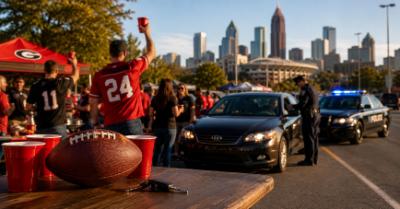
Football season does not create a separate DUI offense in Georgia. O.C.G.A. § 40-6-391 applies the same DUI standards on game day as it does on other days. A less-safe DUI allegation can focus on whether alcohol, drugs, or a combination of substances allegedly made you less safe to drive. A per se alcohol charge for a driver age 21 or older can focus on a qualifying alcohol concentration of 0.08 grams or more within the statutory three-hour period.
Game-day conditions can affect how the evidence looks. A slow turn may involve pedestrians crossing near a stadium. Sudden braking may follow stopped traffic. Hours of standing, walking, heat, fatigue, or uncomfortable footwear may affect balance or movement. Those facts do not decide a DUI case by themselves, but they can matter when an attorney compares the officer’s observations with video, roadway conditions, testing records, and other evidence.
For more information about Georgia DUI defense in Atlanta, review:
https://www.willislawga.com/atlanta-dui-lawyers/
1. Leaving a Tailgate After Drinking
Leaving a tailgate after drinking can lead to a DUI investigation when an officer first observes a possible traffic violation or another lawful basis for a stop. The officer may then focus on odor, speech, eyes, movements, statements about alcohol consumption, driving behavior, and responses to questions.
An officer may ask you to perform field sobriety exercises or take a preliminary roadside breath test. Roadside exercises and a handheld roadside breath screening are different from the state-administered breath, blood, or urine testing process that may follow an arrest.
Field sobriety evidence should be reviewed in context. Lighting, pavement, traffic, footwear, fatigue, medical conditions, instructions, and the way an exercise was demonstrated can all become relevant to the evaluation.
Learn more about field sobriety testing in Atlanta, Georgia:
He's the only lawyer in the State of Georgia to ever be recognized for all three of these accomplishments. Received the Samurai Lawyer Award for having gone to jail for a total of 4 days in order to save his own client Received the BadAss Lawyer Award for the biggest impact of all DUI lawyers in DUI defense in the country Received the vote of Georgia Lawyers as a Superlawyer in DUI Law for 10 straight consecutive yearsGreg Willis has been successful at defending DUI cases (over 93.1% without a conviction)
2. A Minor Traffic Mistake in Postgame Congestion
A minor traffic mistake in postgame congestion can become the stated reason for a traffic stop. Atlanta game traffic may involve temporary traffic patterns, officers directing intersections, pedestrians, buses, rideshare pickups, and drivers searching for unfamiliar exits.
If a DUI arrest follows, the reason for the stop deserves review along with the evidence gathered afterward. Dash-camera footage, body-camera footage, intersection video, traffic-control signs, and witness accounts may help show whether the officer’s description matches the conditions you faced.
A lawful traffic stop does not prove DUI. The prosecution still has to prove the charged offense beyond a reasonable doubt.
For more information about challenges involving a traffic stop, review:
https://www.willislawga.com/atlanta-unlawful-police-stop-attorneys/
3. Encountering a DUI Roadblock After the Game
Encountering a DUI roadblock after the game can lead to a brief screening that develops into a longer investigation if officers observe facts they believe support further detention. Georgia permits DUI roadblocks when constitutional requirements are satisfied.
A roadblock case can require a review of how the checkpoint was planned, approved, marked, and operated. An attorney may also examine the method used to stop vehicles and the facts officers relied on to extend the encounter.
If you are arrested at a roadblock, preserve the location, approximate time, lane, agency name, and anything you remember about signs, cones, marked vehicles, and officer instructions. Those details can help identify roadblock plans, supervisory records, body-camera footage, and other evidence.
Learn more about Atlanta DUI roadblocks:
https://www.willislawga.com/atlanta-dui-roadblocks-attorneys/
Greg has truly mastered his craft. His preparation is second to none and his confidence helps reduce the nervousness and anxiety his clients face. He is a real life version of Harvey Specter and I highly recommend him.” - Travis Greg and his team are absolutely incredible. Greg explained everything to me in detail, as this is the first ever time I have been arrested. Regular updates throughout the process which allowed me to get on with everyday life. 200% I would recommend Greg and his team to anyone with a DUI case." - James Hellens Mr Willis is the best in the business. He knows the law inside and out. I was in a serious jam and Greg got my dui reduced to a reckless driving. This man will fight for you every step of the way." - Anonymous
4. Driving With an Open Container After a Tailgate
Driving with an open container after a tailgate can create a separate legal issue from a DUI allegation. O.C.G.A. § 40-6-253 generally prohibits consuming an alcoholic beverage or possessing an open alcoholic beverage container in the passenger area of a motor vehicle that is on the roadway or shoulder of a public highway, subject to statutory exceptions.
The location of the vehicle and the location of the container matter. An open container found in or near a vehicle does not, by itself, prove that the driver was under the influence. Police may still consider the container when deciding whether to investigate further.
Questions may include who possessed the container, whether it met the statutory definition of an open container, where it was found, whether the vehicle was on a roadway or shoulder of a public highway, and whether a statutory exception applies.
Learn more about Georgia open-container law:
5. Moving a Vehicle Inside a Tailgate or Parking Lot
Moving a vehicle inside a tailgate or parking lot can still lead to a DUI investigation. Georgia DUI law applies to a person who drives or is in actual physical control of a moving vehicle while meeting one of the prohibited DUI conditions listed in O.C.G.A. § 40-6-391.
The distance traveled does not have to be long for movement to become important evidence. A short repositioning in a parking area can still create a factual question about who drove, when the vehicle moved, and what the driver’s condition was at that time.
If police find you sitting or sleeping in a stationary vehicle, that fact alone does not establish that you were in actual physical control of a moving vehicle while under the influence. Officers may look for witness statements, surveillance video, vehicle position, keys, engine condition, receipts, phone records, or other evidence that may help establish a timeline.
Related information is available at:
Related Videos
Choosing a Georgia DUI Attorney
Defenses and Strategies to Defend a DUI Charge
6. Underage Driving After a Football Event
Underage driving after a football event is subject to a lower per se alcohol threshold in Georgia. Under O.C.G.A. § 40-6-391(k), a driver under age 21 can face an underage DUI charge when the driver’s alcohol concentration is 0.02 grams or more within three hours after driving or being in actual physical control of a moving vehicle, based on alcohol consumed before that driving or control ended.
That 0.02 threshold is different from the 0.08 per se threshold that generally applies to drivers age 21 or older. An underage case can also involve separate allegations or evidence involving alcohol possession, passenger statements, photographs, social media, receipts, or witness accounts.
If you are under 21 and arrested after a football event, keep every court and license document, avoid posting about the incident, and review deadlines promptly.
Learn more about under-21 DUI cases in Atlanta:
https://www.willislawga.com/atlanta-under-21-dui-lawyers/
7. A Minor Crash That Becomes a DUI Investigation
A minor crash that becomes a DUI investigation may begin with a low-speed parking-lot collision, a rear-end crash in stop-and-go traffic, contact with a curb, or another game-day driving event. Officers may ask where you were, who was driving, what you consumed, and when the crash happened.
A crash does not establish impairment by itself. Evidence may include vehicle damage, photographs, witness accounts, emergency calls, surveillance footage, body-camera footage, statements, field sobriety evidence, and chemical testing.
Timing can become especially important when there is a dispute about who drove, when the vehicle moved, when alcohol was consumed, or when a chemical test occurred.
What Happens After an Atlanta Game-Day DUI Arrest
An Atlanta game-day DUI arrest can create a criminal case and a separate driver’s license matter that move on different schedules. The criminal charge generally proceeds in the court that has jurisdiction over the alleged offense. Your home address does not move the case to another county.
A separate Georgia Department of Driver Services process may also begin. If you receive a DDS Form 1205 or 1205S, Georgia law generally provides 30 days from personal notice or receipt of notice to submit a written request for an Administrative License Suspension hearing and the required filing fee. Other options may apply to eligible drivers, so read the notice promptly before choosing a course of action.
Learn more about Georgia’s 30-day license rule:
https://www.willislawga.com/atlanta-drivers-license-suspension-lawyers/30-day-rule/
Evidence to Preserve After a Football-Season DUI Arrest
After release, preserve accurate information while events are still fresh. Useful material may include:
- Citations, bond papers, testing documents, and DDS notices
- Tailgate, parking, restaurant, concession, hotel, and fuel receipts
- Rideshare records and phone location history
- Photographs or videos showing parking, roadway, lighting, weather, or traffic conditions
- Names and contact information for passengers and other witnesses
- Relevant medical information that may affect balance, speech, vision, hearing, or coordination
- Clothing and footwear worn during roadside exercises
- Vehicle photographs, repair estimates, tow records, and crash-related documents
- Any personal video that may show the tailgate, parking area, roadblock, or traffic conditions
Preserve original files when possible. Do not delete messages, edit videos, contact witnesses to coordinate accounts, or post details about the arrest on social media. Write a private factual timeline for your attorney while your memory is fresh.
Speak With an Atlanta DUI Attorney
An Atlanta DUI attorney can review a football game-day arrest as a sequence of events rather than as one test result or one sentence in a police report. Willis Law Firm represents people facing DUI charges in Atlanta, Georgia, and nearby communities.
Attorney Greg Willis has trained as both a student and an instructor on National Highway Traffic Safety Administration standardized field sobriety evaluations. The firm can review the traffic stop or roadblock, officer observations, video, field sobriety evidence, chemical testing, open-container issues, license notices, and court process.
Learn more about Greg Willis:
https://www.willislawga.com/georgia-attorney-greg-willis/
Learn more about Atlanta DUI defense:
https://www.willislawga.com/atlanta-dui-lawyers/
Call 404-800-0025 to request a free consultation or visit:
https://www.willislawga.com/contact-us/
No lawyer can promise a dismissal, reduction, acquittal, or specific sentence. Every case depends on the facts, evidence, applicable law, court, and procedural history.
This article is for general informational purposes only and is not legal advice. Reading this article does not create an attorney-client relationship. Consult an attorney about your specific situation. This website constitutes attorney advertising.