
More Than 93.1% of Our DUI Cases Have Resulted in No Conviction Over the Past 13 Years
More than 15 years of experience challenging the Supreme Court in DUI cases.


Atlanta DUI Roadblocks Attorneys
Do You Need Legal Help?

Greg Willis has been successful at defending DUI cases (over 93.1% without a conviction)
He's the only lawyer in the State of Georgia to ever be recognized for all three of these accomplishments.
1.
2.
3.

Best Lawyers In America

2025 Atlanta's Best - Defense Law Firm
BadAss Attorney Award

10 Consecutive Years Selected to Super Lawyers

AVVO 10

AV Preeminent


"Attorney Greg Willis is someone I am truly thankful to have had in my corner during one of my most stressful times. He goes above and beyond and has your best interest at heart. I couldn’t recommend him more to anyone in need of someone to represent them as they deal with a DUI."
- Juan Castilla
Read More Client Reviews
Atlanta Criminal Trial Attorney Greg Willis Testifying in front of the Georgia House of Representatives
DUI Roadblocks in Georgia
Arrested for DUI? Call Our Skilled Atlanta DUI Attorney!
If you have been arrested at a DUI roadblock, your first step should be to discuss your case with an experienced DUI attorney. At Willis Law Firm, the Atlanta DUI lawyer is well-versed in the roadblock process and on how to uphold your rights. Our lawyer is included in Super Lawyers® magazine, an honor that goes out to no more than 5% of Georgia lawyers. You can rely on this firm to provide an unparalleled defense of your future.
Understanding DUI Roadblocks in Atlanta, Georgia
DUI roadblocks, also known as sobriety checkpoints, are a common law enforcement tool used throughout Atlanta and surrounding areas. These checkpoints are designed to identify impaired drivers and reduce alcohol-related accidents. While they are legal in Georgia, they must follow strict constitutional guidelines to protect drivers’ rights.
Unlike a traditional traffic stop where an officer must have reasonable suspicion to pull a driver over, DUI roadblocks allow officers to briefly stop vehicles without individualized suspicion. This exception exists because courts have determined that public safety concerns can outweigh minimal intrusion when proper procedures are followed.
Even though these checkpoints are lawful, they are also one of the most frequently challenged aspects of DUI enforcement. A small mistake in how the roadblock is conducted can make the entire stop unconstitutional. This creates an opportunity for a strong legal defense.
Can I Challenge a DUI Roadblock Arrest?
Yes, just as with any DUI arrest, an insightful attorney can scrutinize the details of your case to find a successful defense. In fact, you may have a clearer defense if your arrest stemmed from a DUI roadblock than from a traffic stop. You won’t have a record of reckless driving for one thing.
Why DUI Roadblock Cases Can Be Easier to Challenge
DUI cases that originate from roadblocks often present unique defense opportunities. Since drivers are stopped without suspicion, law enforcement must strictly comply with established legal standards. If they fail to do so, any evidence gathered may be suppressed.
In many Atlanta DUI cases, the defense focuses on whether the checkpoint itself was valid. If the roadblock was improperly set up or executed, the stop may be ruled illegal, which can lead to a dismissal of charges.
Key legal issues often include:
- Whether the roadblock was planned in advance
- Whether officers followed a neutral pattern for stopping vehicles
- Whether proper notice was given to the public
- Whether the stop was minimally intrusive
Courts in Georgia carefully review these factors. Even a small deviation from protocol can significantly impact the outcome of a case.
One of the most important proofs is the reason for which an officer pulled you over. At a roadblock, you weren’t stopped for erratic behavior, so a prosecutor won’t have any visual evidence of impaired driving. Even if you are validly stopped at a roadblock, an officer needs an additional reason to ask you to perform field sobriety tests and a breathalyzer test.
What Happens During a DUI Roadblock Stop
Understanding what typically happens at a DUI checkpoint can help you recognize whether your rights were respected.
During a standard roadblock stop in Atlanta, Georgia:
- An officer will briefly stop your vehicle
- You may be asked for your driver’s license and proof of insurance
- The officer may ask simple questions such as where you are coming from
- The interaction is supposed to be brief unless further suspicion arises
If the officer notices signs of impairment, the stop may escalate. These signs could include the smell of alcohol, slurred speech, or difficulty responding to basic questions.
At that point, the officer may request:
- Field sobriety tests
- A preliminary breath test
- Additional questioning
Without observable signs of impairment, the officer should allow you to proceed without further delay.
If the following weren’t present, your arrest could be invalid:
- Open alcohol container
- Bloodshot eyes
- Other signs of potential intoxication
Field Sobriety Tests and Breath Testing at Roadblocks
Field sobriety tests are commonly used after a driver is stopped at a checkpoint. These tests are designed to evaluate balance, coordination, and cognitive function. The most common tests include:
- Walk-and-turn test
- One-leg stand test
- Horizontal gaze nystagmus test
These tests are subjective and can be influenced by factors unrelated to alcohol, such as medical conditions, fatigue, or even uneven road surfaces.
Breath testing may also be requested. In Georgia, drivers are subject to implied consent laws, meaning refusal to submit to chemical testing can result in license suspension. Still, the administration of these tests must follow strict procedures.
An experienced DUI attorney will examine:
- Whether the tests were administered correctly
- Whether the equipment was properly calibrated
- Whether the officer was trained to conduct the tests
Errors in any of these areas can weaken the prosecution’s case.
What’s more, supervisors must approve a DUI roadblock before it can start. The location must be deemed suitable, meaning that it is a known site of drunk driving arrests and crashes. The checkpoint must also be broadcast beforehand; this includes clear and obvious warning signs on the road. Officers must also stick to a certain, pre-determined order, whether that is asking every driver to stop, or stopping only every third car, for example.
Legal Requirements for DUI Roadblocks in Georgia
Georgia law allows DUI checkpoints, but only when specific conditions are met. Courts have established clear guidelines that law enforcement must follow.
A valid DUI roadblock in Atlanta typically requires:
- Advance planning by supervisory personnel
- A neutral method for stopping vehicles
- Clearly visible signs and police presence
- Minimal intrusion on drivers
- Public notice or visibility to approaching drivers
The purpose of these rules is to prevent arbitrary stops and ensure fairness. Officers cannot randomly decide which vehicles to stop. The process must be consistent and pre-approved.
If any of these requirements are not met, the legality of the stop can be challenged in court.
Common Defenses to DUI Roadblock Arrests
Each DUI case is unique, but several defense strategies frequently apply to roadblock arrests in Georgia.
Improper Roadblock Setup
If the checkpoint was not approved by supervisory personnel or did not follow the required legal guidelines, the stop may be ruled invalid. We obtain and review the roadblock plan, supervisory logs, and operational records to determine whether every requirement was satisfied before the checkpoint began.
Lack of Reasonable Suspicion to Extend the Stop
Even at a checkpoint, officers must develop independent reasonable suspicion before extending the stop beyond the initial brief interaction. If an officer extended your detention without a legitimate basis — beyond simply seeing you at the roadblock — that decision can be challenged.
Faulty Field Sobriety Tests
Field sobriety tests must be administered according to NHTSA standardized protocols. Improper instructions, poor lighting, uneven pavement, medical conditions, fatigue, and anxiety can all affect performance for reasons entirely unrelated to impairment. Any deviation from proper administration weakens the reliability of the results.
Inaccurate Breath or Blood Testing
Breathalyzer devices must be properly calibrated and maintained, with accurate records to prove it. Blood tests require an unbroken chain of custody and proper lab procedures. Errors in equipment maintenance, administration, or documentation can render chemical test results inadmissible.
Violation of Constitutional Rights
Any violation of your Fourth, Fifth, or Sixth Amendment rights during the stop or subsequent arrest can affect the admissibility of evidence. If the stop itself was unconstitutional, the fruit of the poisonous tree doctrine may require suppression of everything that followed — including field sobriety test results, breath test results, and any statements you made.
A strong defense often involves a detailed review of police reports, dashcam footage, bodycam footage, the roadblock plan, supervisory logs, and officer testimony. We obtain all of this material early and review it carefully.
What to Do After a DUI Roadblock Arrest in Atlanta
If you were arrested at a DUI roadblock, the steps you take immediately afterward can significantly affect the outcome of your case.
- Write down everything you remember. Document every detail as soon as possible — the location of the roadblock, the time, what the officer said, how the stop was conducted, whether there were signs posted, how field sobriety tests were explained and administered, and whether you were read your implied consent rights. These details matter enormously when challenging whether the roadblock met legal requirements.
- Do not discuss the case with anyone except your attorney. Do not explain what happened to friends, family, or anyone else. Do not post about the arrest on social media. Statements you make outside of attorney-client privilege can be used against you.
- Act on your license immediately. After a DUI arrest in Georgia, you have a limited window to request an administrative license suspension hearing with the Georgia Department of Driver Services. Missing this deadline results in automatic suspension. Contact an attorney the same day if possible.
- Preserve any evidence that supports your account. If you have receipts, witness contact information, or any other documentation relevant to the night of the arrest, gather and preserve it immediately.
- Contact a DUI attorney as soon as possible. Dashcam and bodycam footage, roadblock planning documents, and supervisory logs all have limited retention periods. The sooner an attorney is involved, the more tools they have to investigate the checkpoint’s validity and build your defense. In roadblock cases particularly, the constitutionality of the stop itself is often the most powerful defense — but it requires prompt investigation.

Locations Served
Related Blogs
Why DUI Arrests Spike in Atlanta Every Spring and How Police Build Their Cases
Springtime in Atlanta often sees a notable increase in DUI arrests. Willis Law Firm has [...]
Mar
Arrested for DUI During Spring Break in Georgia? What Happens Next
Being arrested for DUI during spring break in Georgia is a stressful and confusing experience. [...]
Mar

Atlanta THC DUI Attorney
If you have landed on this page, you are likely looking for help after being [...]
Mar
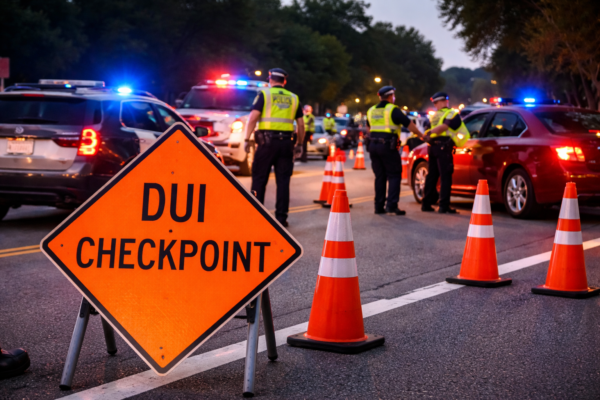
Spring DUI Checkpoints in Georgia: What Drivers Need to Know Before March Ends
As spring approaches in Georgia, the state’s DUI checkpoints are set to increase, with special [...]
Mar
St. Patrick’s Day DUI Arrests in Georgia: What You Need to Know
As St. Patrick’s Day approaches, celebrations across Georgia are gearing up for a festive holiday [...]
Mar
DUI vs Reckless Driving in Georgia: Key Differences
In Georgia, the offenses of DUI (Driving Under the Influence) and reckless driving are serious [...]
Mar

Rainy Spring Roads and DUI Investigations: What You Need to Know
Rainy spring weather in Georgia, including cities like Atlanta, brings its own set of challenges [...]
Mar
Motion to Suppress in a Georgia DUI Case: How It Can Help You Fight Charges
What is a Motion to Suppress in a Georgia DUI Case? In Georgia, a DUI [...]
Feb
Download our free DUI Guide
Learn what you should and shouldn't be doing to help your DUI charge.
DUI Roadblocks — Frequently Asked Questions
Yes, DUI roadblocks are legal in Georgia, but they must comply with strict requirements established by both the U.S. and Georgia Supreme Courts to be considered constitutional. These requirements govern how the checkpoint is planned, approved, executed, and communicated to the public. If any of these specific legal requirements are not met, any evidence obtained from the stop — including a DUI arrest — may be suppressed.
For a roadblock to be constitutionally valid in Georgia, it must be approved in advance by supervisory personnel, have a legitimate primary purpose such as DUI enforcement, be conducted according to a neutral and objective method for stopping vehicles, feature clearly visible signs and marked police vehicles, minimize inconvenience to drivers, and provide public notice or visibility to approaching drivers. Failure to satisfy any of these requirements can make the entire stop unlawful.
No. Police do not need probable cause or even reasonable suspicion to stop your vehicle at a legally-conducted roadblock. The initial stop is considered a suspicionless seizure permitted under the law as long as the checkpoint meets all constitutional requirements. However, officers do need reasonable suspicion to extend the stop beyond the initial brief interaction, and probable cause to arrest you for DUI.
You are required to provide your driver’s license, registration, and proof of insurance. However, you have the right to remain silent and are not required to answer questions about where you are going or whether you have been drinking. You can also legally decline to perform voluntary field sobriety tests. Refusing a state-administered chemical test — breath or blood — will trigger an administrative license suspension under Georgia’s implied consent law.
Yes. You can legally avoid a roadblock by making a lawful turn onto another road before entering the checkpoint. The act of turning around alone does not give officers grounds to stop you. However, if you commit any traffic violation while turning — such as an illegal U-turn, failure to signal, or speeding — officers can use that separate violation as the basis for a traffic stop. Officers at roadblocks frequently watch for vehicles that turn away.
The initial stop and detention at a roadblock must be brief and minimally intrusive. If an officer develops reasonable suspicion of DUI during that brief interaction, they may extend the detention to conduct a DUI investigation. An unreasonably long initial detention without independent suspicion of impairment can itself be grounds for challenging the stop and seeking suppression of any evidence obtained.
The most powerful challenges typically focus on the constitutionality of the roadblock itself. Common grounds include lack of supervisory approval, failure to follow a neutral stopping pattern, inadequate public notice, excessive officer discretion in selecting vehicles, and unreasonable detention time. Beyond the roadblock validity, we also challenge whether reasonable suspicion existed to extend the stop, whether field sobriety tests were properly administered, and whether chemical testing equipment was properly calibrated and maintained.
If a court determines that the roadblock was unconstitutional, the stop itself is ruled unlawful. Under the fruit of the poisonous tree doctrine, all evidence gathered as a result of that unlawful stop — including field sobriety test results, breath or blood test results, and any statements you made — may be suppressed. In many cases, suppression of this evidence leaves the prosecution without enough to proceed, and charges are reduced or dismissed entirely.
Through the discovery process, your attorney can request the roadblock plan, supervisory approval documentation, operational logs, the stopping pattern used, public notice records, officer training certifications, dashcam and bodycam footage, breathalyzer calibration and maintenance records, and blood test chain of custody documentation. This material is essential to evaluate whether the roadblock met every constitutional requirement and to identify any procedural violations that could form the basis of a suppression motion.
Yes, absolutely. DUI roadblock cases are among the most legally complex DUI situations because the constitutionality of the stop itself is at issue — in addition to all the standard DUI defense issues. An experienced Atlanta DUI attorney can obtain and analyze the roadblock’s planning documents, challenge procedural violations, file suppression motions, and in many cases build a defense that goes far beyond what would be available in a standard traffic stop case. Willis Law Firm has a 93.1% no-conviction success rate defending DUI cases across Atlanta and the surrounding area.
Contact Willis Law Firm for a Free Case Evaluation
Many people arrested at DUI roadblocks assume that because the checkpoint is legal, there is nothing to challenge. That is rarely true. The constitutional requirements for a valid roadblock are strict, and law enforcement does not always follow them to the letter. A small procedural failure in how the checkpoint was planned, approved, or executed can make the entire stop unlawful — and that can change everything about your case.
At Willis Law Firm, we know exactly what to look for. We have defended DUI roadblock cases across Atlanta and the surrounding area for over 20 years. We obtain roadblock plans, supervisory logs, dashcam footage, and operational records — and we know how to use them. With a 93.1% no-conviction success rate and a Supreme Court landmark victory, we have the experience and track record to give your case the defense it deserves.
Contact Willis Law Firm today to schedule your free consultation. Time matters — act quickly to protect your license and your record.

Client Reviews

If you’re facing legal troubles and want to make sure you’re hiring the best lawyer to fight your case, the Willis Law Firm is the place to call. Their attorneys are extremely knowledgeable and go above and beyond to make sure their clients receive the best outcome possible. The office staff has always been extremely helpful and compassionate through each step of the way. Greg has helped me and my family with a few cases over the years and we’ve always received a great outcome. He and his staff are the best in the field. There’s a reason why other attorneys hire Greg to handle their cases! Highly recommend their services. You won’t be disappointed.